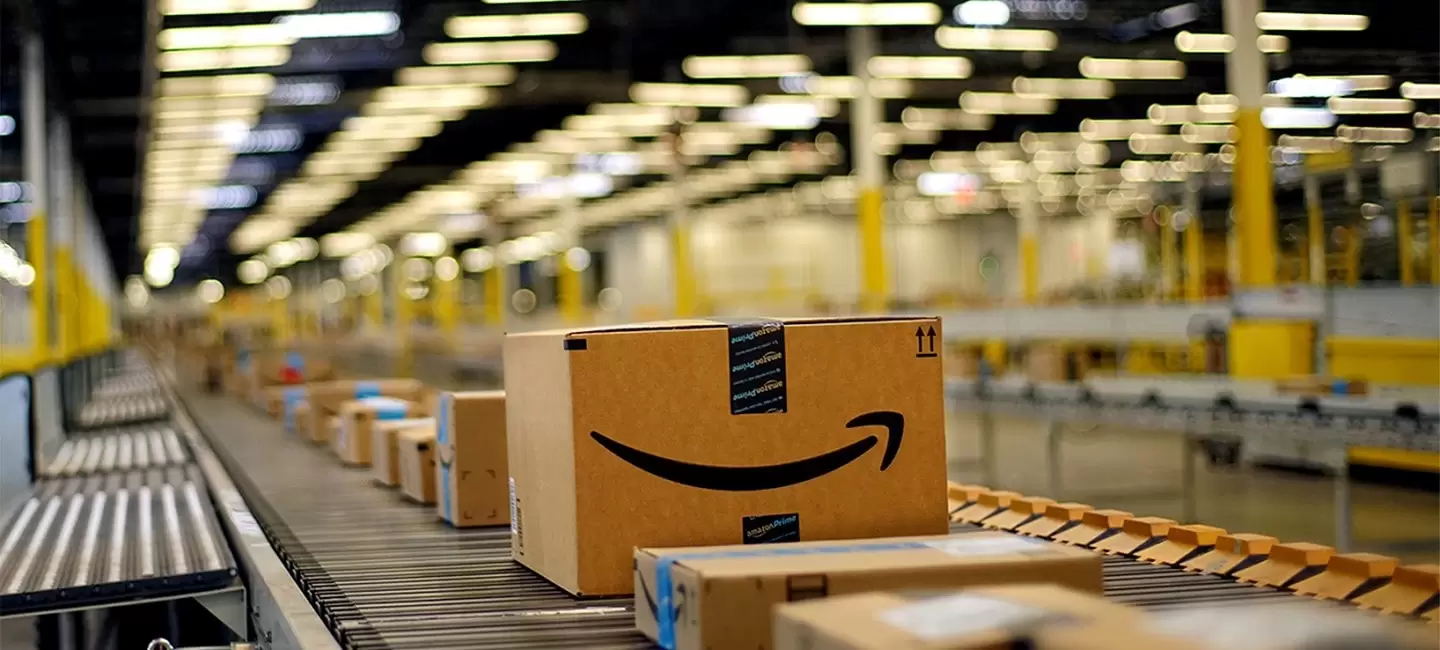
With an abundance of omni channel sales tools in the ecommerce ecosystem, it is now easier than ever to manage your online products in a variety of markets, all with one simple-to-use, single-source-of-truth management system for processing orders. This has led to an influx of businesses selling in markets that were previously unattainable; not least of all is Amazon. And this should be no surprise. Amazon’s Share of all US eCommerce sales hit an all-time high of 56.7% While it can be tempting to jump on the Amazon band wagon, it’s important to evaluate the pros and cons before making the changes necessary to ensure a successful outcome.
Here are 7 things to consider before selling on amazon
1. Product Restrictions
Amazon touts itself as the “everything store”, however, there are a number of industries that have added limitations when it comes to taking advantage of the global market available on Amazon. In fact, there are some products that are out right impossible to sell on Amazon due to various laws and restrictions that are enforced on the site. Things like alcohol, tobacco products, lottery tickets and others are all restricted from being sold through Amazon. In addition to restricted products, many products can only be sold locally, depending on local and federal laws. Having these type of restrictions can cancel out the benefit of selling on Amazon entirely.
2. Customization and personalization
There are also products with unique or nuanced customizations and personalizations that customers are able to change and modify. Often times, the ability to sell such products on Amazon can be limited, requiring merchants to pre-select the variants of a product that they want to sell on the site and ensure the products are adhering to the standard Amazon requires. These types of limitations are not always crippling, however, they can dramatically impact the level of success you’ll have adding Amazon as a sales channel.
3. Shipping, Storage, and handling
Many companies I work with struggle to get a handle on the best options out there for shipping and shipping management. There are a lot of factors in deciding how your going to manage and price shipping for customers. Wether your storing inventory in warehouses of your own, or your products are made to order by 3rd party manufacturers, shipping and storage can often be linchpins in an online business’s operations. For industries that sell products that are large, heavy, fragile, perishable, etc., it can become increasingly difficult to ensure proper shipping costs gets applied at checkout while using Amazon. There ability to take these bespoke shipping rules into account is extremely limited.
There is, however, a way around this by taking advantage of Amazon’s FBA (Fulfillment by Amazon) program. In addition to being listed as an Amazon Prime product, you are able to take the responsibility of inventory storage and shipping fulfillment and pass it off to Amazon to manage and execute on your business’s behalf. This, of course, comes with a fee; Even so, for many businesses this is the best cost / benefit decision to make. Just keep in mind, the more bespoke your shipping requirements, the more Amazon will charge you for the FBA program.
4. Product category Comparison
If you’ve ever shopped on Amazon, you know that any simple search for a specific product category results in a page with thousands of different options, being offered by a variety of companies with a huge range in prices. While filtering and other drill-downs can help limit the number of different options displayed for any given search, it is not perfect. In fact, searching for brand name products still results, in most cases, with a page of products that come from competitors of the brand searched (not to mention Amazon’s private label brands) along side the brand in question. This automatically puts the customer in a mode of comparison. Many businesses on Amazon have lost market shares due to this algorithm; examples of this are companies like Duracell.
Amazon launched their “Amazon Basics” line in 2009. As part of the list of product offerings was batteries. Anyone buying batteries on Amazon are confronted with brands like Duracell, as well as Amazon’s private labelled products. In 2016, Amazon held 30% of the battery market, which made it larger than Duracells shares of the market. Although Duracell still sells on Amazon, many businesses have been unwilling to take the chance of forcing customers to directly compare their product right next to their competitors within one page. This has to be evaluated on a case-by-case basis, but it is nonetheless an important factor to take into account.
5. Brand
In addition to competing directly with other companies on Amazon, you also get your brand presented along side lower quality, and in some cases, counterfeit versions of the same products. As a result, your brand name can be damaged. Getting “dragged through the mud” with customers can be detrimental and difficult to reverse. If you do not have a strong brand positioning, it becomes easy to get lost in the pool of products of lower quality being offered on Amazon. In some cases, even a strong brand positioning is not enough to safe guard against this danger. This is why many well-known brand names refuse to sell on Amazon — It’s a defense of the integrity of the brand. If that is a concern for you and your business, caution would be a wise approach.
6. customer data
Customer Data represents one of the most important factors to consider when deciding wether or not to make the jump to Amazon. It can be one of the greatest reasons for selling on Amazon, however, it can also be the largest reason why you shouldn’t. There is no question that your customer reach extends dramatically when selling on Amazon. The majority of product searches in the United States originate from Amazon. More and more, customers prefer to do their online business in the one-stop-shop convenience of Amazon. As a result, you can broaden your reach and have a fair amount of success in growing your brand. Wether you are an Amazon Seller or Vendor, Amazon charges a variety of fees for selling on their site as well as marketing and advertising fees. In 2022, Amazon made 31 billion dollars from advertisement fees, just to paint a picture of how important this model is to Amazon’s success.
One of the reasons this can either “make or break” your business is that Amazon has created a model in which they own the customers. Companies need to ask themselves (in a quantifiable way), “How valuable is my customer data?”. Amazon certainly understands the value of data as is apparent by their continual growth through data driven strategies. If you want to cultivate long-lasting or intimate relationships with your customer base, or if you think these types of interactions between brand and customer are important, you will find the Amazon ecosystem a hostile place. Part of the price of Amazon is customer ownership. They collect, keep and use your customers data to their own profitable ends. While that sounds unfair, or greedy, it is the basis of the platform and must be recognized outright as a primary concern for any business that is data driven. If customer data is not an important factor for running a successful business within your industry, then you’ve overcome one of the most difficult hurdles to selling on Amazon.
7. distribution and brand enforcement
Another factor to consider is wether or not you have current retail partners, and if there are any distribution agreements that have provisions that give the brand control over certain elements of the relationships. An example of this is minimum advertised price (MAP). This means that the reseller cannot advertise a price for the product below and agreed upon minimum. For Amazon, this means prices cannot be undercut. That doesn’t necessarily mean Amazon is a bad idea, in fact, it could be the reason you should sell on Amazon. You can add Amazon to the list of authorized retailers, however, you can’t control who Amazon decides to do business with and as a result, you can be on the losing side with competitors. For more on distribution concerns, I encourage you to check out “Pricing Policies That Protect Your Brand” (HBR, March-April 2020).
What has your experience been either as a merchant or partner of a merchant? What pitfalls have you discovered as a result of selling on Amazon? What have been the benefits? I’d love to hear your thoughts. Please comment below and thanks for reading!
Leave a Reply